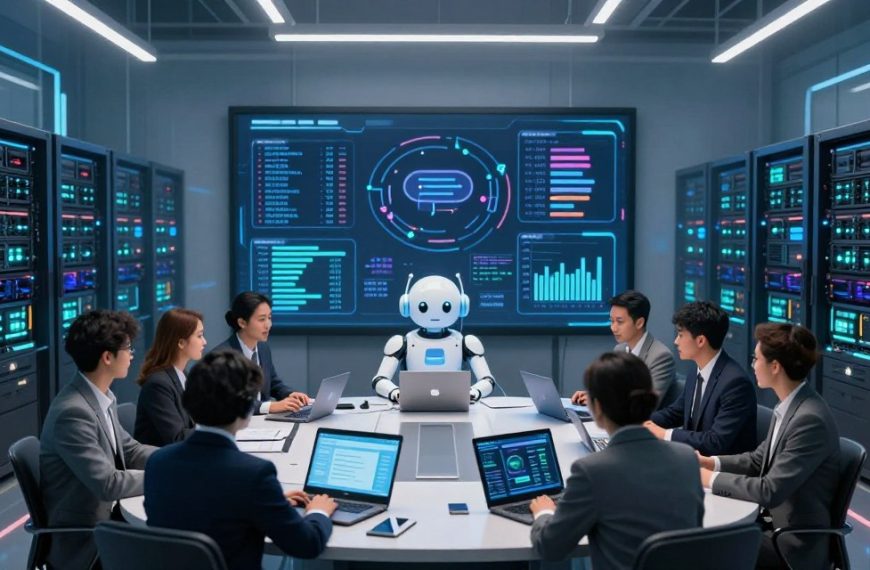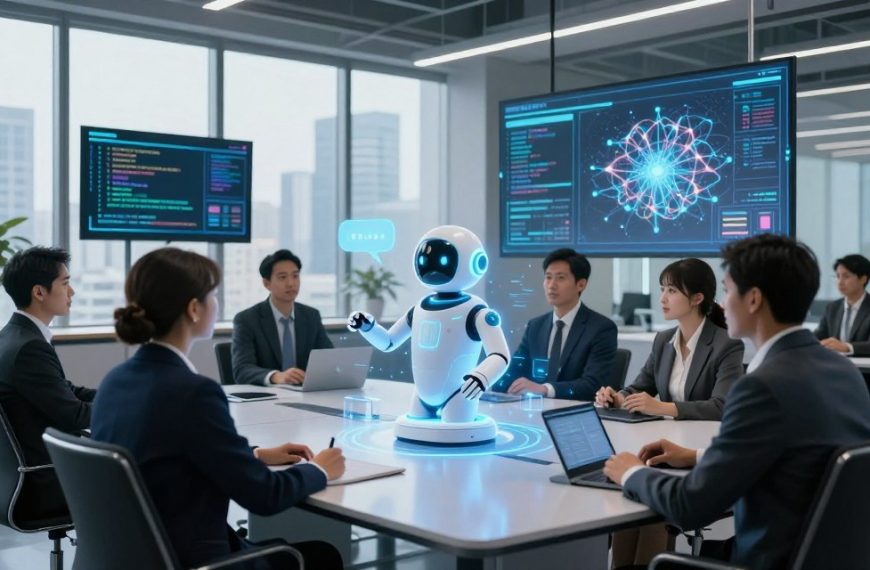


Modern work is full of meetings, but taking notes is a big challenge. Writing down what’s said takes away from the discussion.
Now, artificial intelligence is changing this. It helps teams focus on working together and making decisions.
AI meeting assistants are leading this change. They record calls, write down what’s said, and keep conversations for later. They’re great at finding important points and summarising long talks.
The idea becomes more practical when you connect it to trade stocks ai in automated in a real conversational-AI workflow.
These tools help spot key ideas and make clear tasks. Services like Read.ai act as a smart “AI copilot” for meetings. This makes meetings more effective, letting everyone get involved.
This article looks into how these systems work and their effect on work efficiency. We’ll explore their abilities and the future of automated meeting transcription.
Can a Chatbot Take Meeting Notes? The Definitive Answer
Forget the old idea of a basic chatbot. Today’s AI notetaker software is made for taking meeting notes. The answer is a clear yes. Modern AI chatbots and meeting assistants are advanced tools for capturing, transcribing, and analysing talks in real time.
These tools act as digital note-takers. They work with your video conferencing platforms like Microsoft Teams, Zoom, and Google Meet. They enhance these platforms with new features.
A chatbot meeting assistant helps by taking notes automatically. This lets everyone focus on the meeting. It makes meetings more productive and engaging.
So, what does a modern AI meeting assistant do? It does more than just take notes:
- Live Transcription: Turns spoken words into text as the meeting goes on.
- Intelligent Summarisation: Makes long discussions short and to the point.
- Insight Extraction: Finds important tasks, questions, and dates.
- Knowledge Management: Creates a record that teams can search and use.
This change from simple chatbot to AI notetaker software is a big step forward. The right tool becomes a meeting partner. It ensures nothing is missed and every decision is tracked. This leads to a reliable record that saves time and improves clarity.
The Evolution of Meeting Note-Taking: From Pen and Paper to AI
Looking back at meeting notes shows a clear move towards automation. This change is driven by the need for accuracy and efficiency. It marks the journey from manual notes to smart analysis, aiming for perfect recall.
For years, the notepad and pen were key in meetings. They relied on a person’s ability to listen, understand, and write at the same time. The main problem was human cognitive load. Trying to talk and take notes led to missed points and personal bias.
“The palest ink is better than the best memory.” This saying shows the need for documentation. It also points out the weakness of manual methods.
Typewriters and computers brought typed minutes into the picture. This made notes clearer and more standardised. But, it caused delays as notes were written after the meeting. It also made one person the only note-taker, taking them out of the discussion.
The digital note taking evolution got a boost with shared documents and cloud services like Google Docs. This allowed everyone to contribute in real-time. Yet, old problems like formatting issues and the need for active listening remained.
The table below shows how each method tried to solve its own problems:
| Method | Key Tools | Primary Limitations | Impact on Productivity |
|---|---|---|---|
| Pen & Paper | Notepad, shorthand | Prone to loss, illegibility, and subjective interpretation. No easy sharing. | Low. Creates a siloed, incomplete record. |
| Typed Minutes | Typewriter, Word Processor | Time-lagged transcription, single point of failure (the note-taker), inconsistent formats. | Moderate. Improves permanence but sacrifices real-time engagement. |
| Shared Digital Documents | Google Docs, Wikis, OneNote | Requires manual input during meeting, formatting disputes, scattered action items. | Improved collaboration, but human multitasking is needed. |
| AI-Powered Automation | AI assistants like Otter.ai, Fireflies.ai | Potential for contextual error, data privacy considerations. | High. Automates capture, freeing participants to focus on discussion. |
Each step tried to fix the flaws of the last. Typed minutes improved clarity. Digital tools solved access issues. But, the main problem—the human as the recording device—remained. This challenge led to the current shift.
Artificial intelligence is the next step in digital note taking evolution. It automates capture and analysis, solving the long-standing problem of participation vs. documentation. AI reduces human error and ensures consistent output.
Today’s meeting productivity tools with AI do more than record. They understand context, spot action items, and create summaries. This change is not just about new tools. It’s a new way to capture and use meeting insights, turning talks into useful organisational knowledge.
How AI-Powered Chatbots Actually Capture and Process Notes
AI chatbots don’t use magic to take meeting notes. Instead, they use a detailed process. This process combines automatic speech recognition and natural language processing. It turns everyday talk into clear, useful records. This makes the tool’s power clear for your work.
The Core Technology: Automatic Speech Recognition and Natural Language Processing
At the core of AI note-takers are two key technologies. Automatic Speech Recognition (ASR) is like the system’s ears. It changes spoken words into digital text. ASR engines learn from lots of data to handle different voices and background sounds.
Tools like Granola make this easier. They record your computer’s audio, so you don’t need a virtual ‘bot’ on the call. This makes things simpler and more reliable. But, the raw text from ASR is just the start.
Natural Language Processing (NLP) is the AI’s brain. It understands context, intent, and meaning. It looks at sentence structure, finds important details, and even checks the mood. This is what makes meeting notes smart, not just a text copy.
The Three-Stage Process: Transcription, Analysis, and Summarisation
The journey from audio to insight is clear and automated. The first transcription stage gives a text record of what was said. It also tags who spoke. Getting this right is key, as mistakes affect later steps.
The analysis stage uses NLP to understand the text. The AI looks for important points, decisions, questions, and more. This is when the app starts to give real insights, not just a text copy.
The summarisation stage makes sense of all the data. The AI turns long discussions into a short summary. It highlights key points and organises action items. This saves time by making documents easy to review and share.
This three-step process—capture, understand, and summarise—is how these tools boost productivity. They make speech permanent, searchable, and useful for work.
Unlocking Productivity: Key Benefits of Using AI for Notes
AI note-taking tools do more than just transcribe. They bring big advantages that change how meetings work. They move from old, error-prone ways to new, smart ones. This change boosts team work and keeps important meeting info safe.

Enhanced Accuracy and Completeness of Records
Even the best note-takers can miss things in fast talks. AI fixes this by making exact, word-for-word records. It catches every detail, big or small.
This means you get a full, true record of what was said. It’s perfect for legal stuff, checking projects, and avoiding mix-ups. It’s all about being clear and accurate.
Significant Time Savings and Increased Participant Focus
AI saves a lot of time. No more spending hours writing down what was said. Tools like Read.ai say users save hours each week.
This saves time in two ways. It frees up hours for other things. It also lets everyone focus on the meeting, not just taking notes. Meetings become more productive and fun.
Improved Tracking of Action Items and Decisions
Good meetings have clear results. AI helps find the important stuff. Tools like Fireflies.ai find action items and decisions automatically.
This makes sure everyone knows what to do next. It turns vague plans into real tasks. Teams do better because they know exactly what to do.
“The real power isn’t just in recording the meeting; it’s in extracting the intent and the commitments made within it.”
Powerful Search and Long-Term Knowledge Management
AI turns meetings into a living library. Notes don’t get lost anymore. Tools like tl;dv search all meetings easily.
Need to find something from months ago? Just search. It’s like having a super-smart librarian for your meetings. It keeps your team’s knowledge fresh and strong.
Tools like Read.ai’s Search Copilot make searching easy. They turn old meetings into valuable assets. Your meeting history becomes a key part of your strategy.
Understanding the Limitations and Practical Challenges
AI note-takers are very efficient, but we must see their flaws. Knowing these AI meeting limitations helps us use them better. It’s about finding the right balance to get the most out of them.
Contextual Misunderstandings and Loss of Nuance
AI is great at handling clear speech. But, human talks are different. It struggles with jargon, technical terms, and even emotions like sarcasm.
When many talk at once, AI notes can get messy. This shows AI notes are a good start, but humans must check them for accuracy.
Security, Privacy, and Data Residency Concerns
AI tools handle your meeting audio, touching on sensitive data. So, data privacy in AI notes is a big deal. You need to know where your data is stored and who can see it.
Checking a vendor’s security is essential. Look for audits and certifications like SOC 2. Also, make sure they follow laws like GDPR or HIPAA.
Integration Hurdles with Existing Workflows
A new AI tool won’t work if your team doesn’t use it. Integrating it into your current systems can be tough. If your platform already has AI, adding another tool might be unnecessary.
Getting your team to use it means more than just setting it up. They need training and clear rules for using the AI notes. This ensures it fits into your workflow smoothly.
| Challenge Area | Potential Impact | Recommended Mitigation |
|---|---|---|
| Contextual Accuracy | Misinterpreted jargon, lost nuance, errors from overlapping speech. | Always review and edit the AI transcript. Provide a list of key terms to the tool if possible. |
| Data Security & Privacy | Risk of sensitive information being stored or processed insecurely. | Select vendors with SOC 2, GDPR, or HIPAA compliance. Review their data storage policies thoroughly. |
| Workflow Integration | Low adoption, redundant tools, disruption to existing processes. | Run a pilot programme. Assess built-in platform features first. Provide team training and clear usage guidelines. |
Knowing the downsides is key to using AI tools well. By tackling issues like accuracy, data privacy for AI notes, and integration, we can make smart choices. This way, we boost productivity while keeping risks low.
Essential Criteria for Selecting an AI Note-Taking Tool
To find the right AI note taker, focus on three key features. These features make a big difference between simple apps and smart tools that change how we meet.
Use a detailed framework, like Zapier’s, to evaluate tools. Look for easy setup, top-notch AI, and deep connections with other apps. This ensures you get a tool that really helps.
Transcription Accuracy and Speaker Identification
Meeting transcription accuracy is essential. A good tool works well in real situations. This means it works over bad internet, in noisy rooms, and with different voices.
Check if the tool shares its accuracy scores. But, the best test is to try it with your team’s meetings.
It’s also important for the AI to know who said what. This helps with keeping track and following up. Good tools can tell speakers apart, even when they talk over each other or join in remotely.
Depth of AI Analysis: Summaries, Actions, and Sentiment
Transcription is just the start. The real value comes from what the AI does with that data. When picking an AI note taker, look at what it can do beyond just writing down what was said.
Can it make short, smart summaries of meetings? Does it spot decisions and pull out action items? Some tools even check how people feel during the meeting.
These advanced features turn a long transcript into something useful. They save time and help teams stay on the same page.
Seamless Integration with Your Current Software Stack
The best AI note taker fits right into your workflow. Seamless integration makes it a real productivity booster.
Look for tools that work well with your video calls, calendar, and chat apps like Slack or Teams. Being able to connect with project management or CRM systems is a big plus.
For example, it can turn action items into tasks and share meeting notes without you having to copy and paste. This saves time and keeps things organised.
By carefully checking these three areas—transcription quality, AI smarts, and integration—you can find an AI tool that’s a key part of your team’s success.
A Closer Look at Leading AI Note-Taking Solutions
AI note-takers cater to different needs. The right tool depends on your meeting culture and software stack. This analysis breaks down four market leaders to help you choose.
Otter.ai: The Collaborative Transcription Powerhouse
Overview and Primary Functionality
Otter.ai is a real-time transcription assistant for teamwork. It offers accurate automatic speech recognition (ASR) during meetings. Its collaborative interface lets multiple participants highlight and comment on the transcript.
The platform has a generous free tier for 300 minutes of transcription per month. Paid plans start at around $8.33 per user per month, with more features.
Advantages and Potentia Drawbacks
Key strengths include its user-friendly editor and robust sharing. It’s great for project teams and students. The live transcript feature keeps participants engaged.
Potential limitations include its analysis depth. While it extracts actions and keywords, its AI summaries might be less nuanced. Some users find it hard to export to other apps.
Fireflies.ai: Specialising in Actionable Insights and Automation
Overview and Primary Functionality
Fireflies.ai focuses on analysing conversations and automating workflows. Its AI, ‘Fred’, classifies topics, tracks questions, and gauges sentiment. A key feature is ‘AskFred’, a chatbot that answers questions about past meetings.
Priced at around $10 per user per month, it integrates with popular tools to automate tasks.
Advantages and Potentia Drawbacks
The platform excels at turning talk into actionable data. Its topic tracking and sentiment analysis offer a meta-view of meeting dynamics. The automation workflows save administrative time.
Its interface can feel cluttered with analytics. The depth of automation requires careful setup. Its transcription accuracy may trail dedicated leaders in noisy environments.
Microsoft Copilot in Teams: The Integrated Enterprise Choice
Overview and Primary Functionality
Copilot offers a native, integrated experience for Microsoft 365 users. It uses company data to provide intelligent recaps and action items for Teams meetings.
It includes automatic transcription, speaker identification, and concise summaries. Access requires a Copilot for Microsoft 365 subscription add-on.
Advantages and Potentia Drawbacks
Its primary advantage is seamless integration. Notes and tasks appear directly within Teams and Outlook workflows. Security and compliance are managed under the organisation’s Microsoft 365 tenant.
The main drawback is cost and platform lock-in. It is a premium add-on and provides the most value within the Microsoft universe. Its features are less customisable than standalone tools, and it is not designed for capturing meetings outside Teams.
Zoom AI Companion: Optimised for Zoom Users
Overview and Primary Functionality
Zoom AI Companion is built into the Zoom Meetings platform for paid plan users. It provides meeting summaries, smart chapters, and highlights of next steps without a separate subscription.
The tool focuses on convenience for Zoom-centric teams, with no extra integration steps.
Advantages and Potentia Drawbacks
The biggest benefit is ease of use and zero extra cost for existing Zoom Pro subscribers. The smart chapters feature is useful for reviewing long recordings. It simplifies AI assistance without managing another tool.
Limitations include its narrow scope. It is designed solely for Zoom meetings and lacks deep workflow automation or collaborative editing features. The analysis can be more general, and the tool offers less control over where and how notes are stored and shared compared to others.
Beyond these four, other notable solutions include Granola and Read.ai. Your final choice should balance transcription accuracy, analytical depth, integration needs, and budget.
Implementing AI Note-Taking in Your Organisation’s Workflow
To get the most out of AI note-taking, focus on two key steps: pilot testing and setting policies. A good meeting workflow integration is more than just buying software. It needs a thoughtful plan that considers people and process changes.
Starting with a Pilot Programme and Team Training
Start with a pilot programme in a single department or team. Pick a group that meets often. They will test the new tool.
Give them detailed training on using the tool. Teach them how to start recordings, access notes, and use summaries. Ask them to use it in all meetings during the trial.
Get feedback from the pilot team. What do they like most? Where do they struggle? This feedback helps improve your plan before rolling it out to more people.
The pilot phase shows the tool’s value. Track how much time it saves, how well it tracks tasks, and how happy users are. This data helps make a strong case for using it more widely.
Establishing Clear Usage Guidelines and Protocols
For everyone to use the tool, clear rules are essential. These rules make sure the tool is used right and safely. They turn a new tech into a reliable part of your business.
Your rules should answer important questions:
- When should meetings be recorded? Decide when it’s okay to record, like at project starts or when making big decisions. Make sure everyone agrees.
- Who can see the notes and summaries? Decide based on job roles. Some talks might need to be kept private.
- How should meetings be named and stored? Use a standard naming system (like “ProjectX_Review_20241030”) and pick a safe place in the cloud.
- What’s the rule for checking and editing? Choose someone to check the AI’s work for mistakes before sharing it.
Share these rules through wikis, training, and team talks. This groundwork makes integrating the tool into your workflow easy. It keeps things safe and makes sure everyone uses it well.
By carefully piloting and then setting clear policies, you can make AI note-taking a key part of your team’s success.
Best Practices for Maximising the Value of AI Notes
Getting an AI note-taker is just the start. Its real value comes from how you use it. To get the most out of it, follow some key AI meeting best practices. This turns meeting notes into useful information.
Here are some tips to get clean data, accurate records, and real results from your meetings.
Optimising Meeting Audio for Clean Transcription
The quality of your audio affects how well an AI tool works. Bad audio can lead to wrong transcriptions. So, making your audio clear is key.
Use a good microphone, even a simple USB one, instead of your laptop or phone’s mic. For meetings with lots of background noise, tools like Krisp are great. Krisp uses AI to remove background sounds, giving you cleaner audio for your notes.
Also, ask everyone to mute when not speaking and avoid side chats. For important meetings, having a quiet space is essential for good AI results.
The Crucial Step of Reviewing and Editing AI Output
Think of AI notes as a first draft, not the final version. While they’re usually accurate, they can miss important details. This is because of jargon, acronyms, or fast conversations.
It’s important to quickly review AI transcription. Choose someone to check the summary within five minutes of the meeting. They should fix any mistakes, clear up unclear points, and add missing details.
This review isn’t about rewriting everything. It’s about adding the human touch that makes the notes reliable and complete. This step makes the AI’s notes trustworthy and useful.
Acting on AI-Generated Insights and Action Items
The true value of an AI note-taker is what you do with it. The real benefit is in turning discussion into action.
Share the summary and action items with everyone involved right after reviewing them. Most tools make it easy to share. Then, the important step: put action items into your project management system like Asana or Jira.
Assign tasks and deadlines in these systems. This keeps all work in one place and ensures meeting decisions are followed up. By acting on AI insights, you make progress from your meetings.
Navigating Security and Confidentiality with AI Tools
Before using an AI chatbot, organisations must check its security and privacy. Automated note-taking means sharing sensitive talks and data with a third party. So, it’s vital to carefully check a service’s security and follow rules.
Evaluating Vendor Data Storage and Processing Policies
Start by looking at the vendor’s security documents. You should know where your data is stored and how it’s protected. Also, find out if your data helps train the AI models.
Many providers are open about these details. For example, Read.ai says it follows SOC 2 Type 2, GDPR, and HIPAA. Fellow is known for its focus on data privacy and user control.
Look for independent certifications like SOC 2 Type 2. This shows a vendor’s security controls are effective. This step is key for secure AI note taking.
| Tool / Aspect | Key Certifications | Data Encryption | Data Used for Training? | Notable Privacy Feature |
|---|---|---|---|---|
| Read.ai | SOC 2 Type 2, GDPR, HIPAA | End-to-end | Typically no (check policy) | Healthcare compliance focus |
| Fellow | GDPR, CCPA | In transit & at rest | No | User retains data ownership |
| Otter.ai | SOC 2, GDPR | 256-bit AES | Opt-in only for improvement | Custom vocabulary for accuracy |
| Fireflies.ai | GDPR, CCPA | Enterprise-grade | No for paid plans | Automated data deletion rules |
Ensuring Compliance with GDPR and Other Regulations
For businesses in certain areas, following rules is a must. The GDPR sets high standards for GDPR meeting transcription and data handling. It requires lawful processing and the right to erasure.
Other laws like the CCPA in California and HIPAA for healthcare data in the US also apply. These laws give people rights over their data.
When picking a tool, make sure it meets your industry’s rules. A good tool for secure AI note taking will explain its GDPR, CCPA, or HIPAA compliance. Don’t just assume it’s compliant; ask for proof and understand how it helps you meet your obligations.
Being proactive about security and privacy makes your AI note-taking tool reliable. It ensures your data is safe while you work efficiently.
The Future Landscape: AI’s Expanding Role in Meetings
The next step in meeting tech is AI that gets not just what’s said but how and who says it. It’s moving beyond just writing down words. The future of AI meetings will be about working together and gaining deep insights. Tools like Avoma already show this, with features on filler words and who talks the most.
This is just the start. It’s building a base for more advanced tools that will change how we meet.
Predictive Analytics and Real-Time Meeting Assistance
AI will soon go from just writing things down to actively helping. Imagine an assistant that doesn’t just record decisions but also finds the right documents instantly. This is what predictive analytics in meetings could do.
This tech could understand conversations as they happen and suggest actions. For example, if a deadline is mentioned, it might mark it in your project tool. It could also make sure everyone gets a chance to speak by reminding quieter people to share their thoughts.
This change makes AI a valuable partner in meetings. It makes them more productive and fair from the start.
The goal isn’t to replace people, but to help them. Using data to make sure everyone’s heard and decisions are well-informed.
Emotional Intelligence and Participation Analytics
Future AI will understand emotions better than today’s. It could pick up on feelings like confusion or excitement. This would help the meeting leader know how the team is doing.
This is linked to meeting participation analytics. AI will look at who talks the most and who gets interrupted. It aims to make sure everyone has a fair say. This turns meetings into tools for checking team health and communication.
In short, AI in meetings will make them better. They’ll be more aware and supportive. We’ll get better notes and more effective meetings that focus on both ideas and people.
Conclusion
AI chatbots and assistants are now key to taking meeting notes. They’ve moved beyond being just a novelty. They are now essential for productivity.
Teams see big benefits. They get more accurate notes, save time, and track decisions better. These tools make meetings a place to find knowledge.
But, it’s important to review these notes and keep them secure. This was discussed earlier.
Choosing the right tool is important. You need to think about how accurate the transcription is, how deep the analysis goes, and how well it integrates with other software. Otter.ai, Fireflies.ai, Microsoft Copilot in Teams, and Zoom AI Companion each have their own strengths.
For those looking to save money, there are resources on the best prompts for meeting notes. Claap shows how AI can make workflows faster and give insights without costing a lot.
AI’s role will grow, bringing more insights and participation. Using AI for chatbot notes summary is now a smart move. It leads to a more efficient, accountable, and intelligent workplace. This AI meeting notes conclusion shows a future where we focus on the discussion, not just the notes.


 By
By