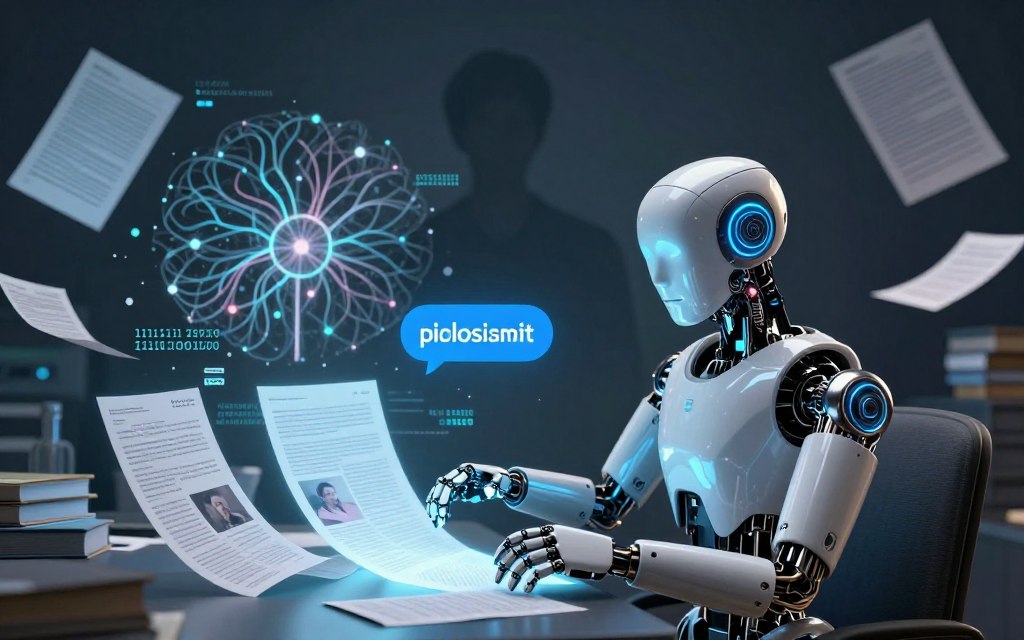

The rise of artificial intelligence has changed how we create content. Tools like ChatGPT can write text in seconds. This raises a big question: does a chatbot plagiarise?
This debate touches on a key issue. AI models learn from huge datasets of human work. They then create new text based on what they’ve learned.
The text they produce can seem very original. But, it’s really made up of ideas already out there. This makes us question what we think of intellectual property and authorship.
It’s important to understand AI plagiarism. It affects education, professional writing, and laws worldwide. This article will explore the limits and ethics of AI-generated content.
1. Defining Plagiarism in the Digital Age
The digital age has changed how we see plagiarism. What was once simple copying from books or journals is now a complex issue. It involves online sources, automated tools, and even artificial intelligence.
1.1. Traditional Definitions and Academic Standards
Plagiarism used to mean taking someone else’s work without credit. Schools worldwide have strict rules to keep things fair. They focus on original work and proper citations.
These rules are clear when it comes to human authors. For example, San José State University has a clear policy:
“the act of representing the work of another as one’s own without giving appropriate credit, regardless of how that work was obtained.”
The policy now says AI-written papers aren’t considered original. This shows how AI and academic integrity are changing old rules.
1.2. How Digital Content and Paraphrasing Tools Changed the Game
The internet made information easy to find and copy. This led to a culture of copying. But, with advanced paraphrasing tools, things got more complicated.
These tools can change content in a way that looks new but isn’t. It’s hard to say if it’s original or just copied. Here’s a comparison of old and new plagiarism:
| Factor | Traditional Plagiarism | Digital-Age Plagiarism |
|---|---|---|
| Primary Method | Manual copying from physical texts | Digital copy-pasting or use of paraphrasing software |
| Source Accessibility | Limited (libraries, owned books) | Vast and immediate (global internet) |
| Detection Difficulty | Relatively high for obscure sources | Variable; easier for direct copies, harder for spun content |
| Intentionality | Often deliberate | Can be accidental due to source overload |
This new world makes plagiarism more complex. It’s setting the stage for even bigger changes.
1.3. The New Frontier: Plagiarism by Non-Human Agents
Now, we’re facing plagiarism by artificial intelligence. Chatbots and LLMs create text based on patterns learned from huge datasets. This raises big questions about copying.
Traditionally, plagiarism involves a human taking someone else’s work. But with AI, it’s not so clear. Does AI mean to copy? Can it understand ownership? This new area is challenging our views on authorship and credit.
It makes us question if our old rules can handle AI’s output. This is a big issue for educators and policymakers.
2. How AI Chatbots Actually Work: A Primer on Large Language Models
To understand if AI can plagiarise, we need to learn about large language models. These systems are not alive but are very smart statistical machines. They are key to the debate on AI-generated content’s originality and copying.
Large language models work by studying huge datasets to find word and phrase patterns. They guess the next word in a sequence based on what they’ve learned. This is more like complex pattern recognition than writing with a mind.
2.1. From Data Ingestion to Pattern Recognition
The journey of a large language model starts with data. Developers train these models on huge amounts of text from the internet, books, and more. This data is trillions of words, a vast library of human language.
During training, the model doesn’t memorise sentences. Instead, it finds patterns. For example, it learns that “king” often goes with “queen” and “crown.” It learns about syntax, context, and style from millions of examples.
This pattern-matching skill lets the model create coherent text. When you ask a chatbot a question, it uses these patterns to make a plausible answer. As research shows, this is about predicting the next word based on probability.
2.2. The Role of Neural Networks and Probability
The brain of a large language model is a neural network, inspired by our own brains. This network has billions of parameters that are adjusted during training.
Here’s how it works:
- Input Encoding: Your prompt is turned into numbers the model can understand.
- Contextual Analysis: The model’s layers work together, weighing each token’s importance.
- Probability Calculation: The model calculates a score for every word in its vocabulary for the next word slot.
- Output Selection: It picks a word with a high score, sometimes adding a bit of randomness for creativity.
This process is all about probability. The model isn’t choosing an idea but picking the most likely word. Its output is a new arrangement of words, not a direct copy.
2.3. Key Architectures: GPT-4, Claude, and Google’s LaMDA
Several famous models show how these principles work. They all have a common base but differ in design and training data.
OpenAI’s GPT-4 is a transformer model known for its wide range of skills. It’s great at creating long, coherent text. Its success comes from its size and training with human feedback.
Anthropic’s Claude also uses a transformer but focuses on ethical AI. It aims to make sure the model’s output follows certain rules, reducing harmful or biased text.
Google’s LaMDA is made for open-ended conversations. It’s trained on dialogue data to understand context and nuance in conversations, making it seem more natural.
Despite their differences, these systems are advanced pattern-matching engines. They create text by combining learned patterns, not by copying stored passages.
Understanding how these systems work is key to judging plagiarism claims. If chatbots don’t copy in the way humans do, we need to rethink how they interact with copyright and originality.
3. The Core Question: Does a Chatbot Plagiarize?
At the heart of the debate is a simple question: can an artificial intelligence plagiarize? We need to look beyond human copying and understand how machines generate content. The real issue is about the output and its connection to the source material, not intent.
This question challenges our old ways of thinking about chatbot originality. It makes us think about “copying” in a new way, not as a human action but as a machine process.
3.1. Analysing the Act of “Copying” in Machine Learning
For humans, plagiarism is about taking someone else’s work and passing it off as our own. Chatbots don’t have this intention. They work by recognizing patterns and making predictions based on their training data.
When an AI creates text, it doesn’t copy in the way we do. It uses statistical learning to guess what comes next in a sentence. It looks at the data it’s been trained on to make these predictions.
As an AI ethicist pointed out,
“We see the machine’s output as if it were made by a person, using our own ideas of authorship. But it’s really just advanced math.”
So, saying a chatbot plagiarizes is often a mistake. We’re using human ideas of plagiarism on something that’s not human. The real issue is how the AI’s output affects others, not its intent.
3.2. The Spectrum from Inspiration to Reproduction
AI content isn’t just “yes” or “no” plagiarism. It’s a range from completely new to exact copies. Most of the time, it’s somewhere in between, making it hard to say if it’s plagiarized.
In some cases, a chatbot might copy text word for word from its training data. This is called “memorisation” or “data leakage.” It happens when the model learns too well from specific data.
For example, an AI might repeat a famous poem or a unique product description exactly. This is the closest it gets to plagiarism. But it does it without any intention to steal.
Developers try to avoid this by using techniques like removing duplicates and protecting privacy during training. But with so much data, it’s hard to stop it completely.
3.2.2. Substantial Similarity Without Direct Quotation
A bigger problem is when AI output is very similar to existing work but not copied word for word. This can include:
- Copying the structure or argument of a source.
- Using a unique phrase or jargon in a similar way.
- Sharing a patented idea or creative concept with just a little change.
This is where chatbot originality gets tricky. The AI isn’t copying words but putting together learned ideas and styles in a way that feels like copying. It might infringe on copyright, even if no single sentence is copied.
This grey area is where most legal and ethical debates will happen. It challenges our ability to tell the difference between good inspiration and copying in AI content.
4. Understanding “Originality” in AI-Generated Content
The debate on AI and plagiarism raises a key question: what is ‘originality’ without a conscious mind? For ages, originality was seen as a human trait—the spark of an idea, the intent to create something new. AI-generated content challenges these views, making us rethink what creativity means.
This section explores the complex issue of AI authorship. We must distinguish between the human feeling of novelty and the machine’s process of recombining. Even if the output seems new, its roots are entirely based on what it has learned.
4.1. Can a System Without Consciousness Be Original?
Traditionally, originality is linked to conscious effort. An author or artist makes choices based on their experiences and goals. This process is what copyright law aims to protect. A chatbot, lacking consciousness, makes no choices. It works on mathematical patterns.
So, can its output be original? From a legal and traditional standpoint, many say no. They argue originality is a human quality. The system is a tool, not a creative mind. This makes AI authorship seem contradictory.
Yet, a practical view offers a different perspective. If originality is about the output—a unique arrangement of words—then AI can achieve it. The machine creates sequences that are statistically new. This highlights the gap between the experience of creation and the fact of a new artefact.
4.2. The Illusion of Novelty vs. Statistical Novelty
This brings us to a key difference: the illusion of novelty versus statistical novelty. When you read an AI paragraph, it might feel new. You might not have seen that exact sentence before. This is the illusion—the convincing presentation of unique content.
But beneath this lies statistical novelty. The AI model calculates word probabilities. It generates the most likely sequence based on its training data. The combination might be unique, but every part comes from its training.
Human creativity often involves mixing different influences with personal insight. AI ‘creativity’ is based on recombining what it has learned. The table below shows the main differences:
| Aspect | Human Novelty | AI Statistical Novelty |
|---|---|---|
| Source | Conscious experience, intent, and synthesis | Pattern recognition across vast training data |
| Process | Deliberate choice, experimentation, and revision | Probability-weighted selection and sequence generation |
| Output Driver | Meaning, emotion, and communication goals | Optimisation for linguistic likelihood and prompt alignment |
| Relationship to Past Work | Can be inspired, referenced, or consciously opposed | Inherently derivative; cannot reference or understand sources |
This difference is key to understanding the difference between human and machine ‘creation.’ It shows why AI can produce text that seems original but raises questions about ownership. The debate on authorship depends on which definition of originality we value.
5. The Training Data Dilemma: Source Material and Memorisation
To find out if a chatbot can plagiarise, we need to look at its training data. This data is not made up of nothing. It comes from huge datasets, which include copyrighted works and personal writings. The risk of this data showing up in chatbot outputs is a big issue.
5.1. The Scale and Sources of AI Training Corpora
The amount of AI training data is huge. Modern models are trained on texts that are like millions of books. This data comes from all over the internet, both public and private.
Common sources include:
- Web pages and encyclopaedic sites (e.g., Wikipedia).
- Digital libraries of books, academic journals, and research papers.
- Public forums, social media posts, and comment sections.
- Code repositories like GitHub for programming-focused models.
- News articles and magazine archives.
This data is like a mirror of the web. It includes all the good and bad, including copyrighted content. Developers use this data under fair use or research exceptions. But, they don’t track who wrote each piece of text.
5.2. The Phenomenon of “Overfitting” and Data Leakage
A key concept is overfitting. Overfitting happens when a model learns the training data too well. It memorises specific examples instead of understanding the bigger picture. This can happen, making the model reproduce parts of the training data.
When this happens, it’s called data leakage. The model might copy parts of its training data word-for-word. This is not because it wants to copy, but because it’s a statistical error. For example, a chatbot might write a paragraph that’s exactly the same as a popular book.
The table below shows the difference between a good model and one that overfits:
| Aspect | Well-Generalised Model | Overfitted Model (Data Leakage Risk) |
|---|---|---|
| Learning Focus | Learns patterns, grammar, and concepts. | Memorises specific sentences and data points. |
| Output Nature | Generates novel combinations based on learned patterns. | May reproduce exact sequences from training data. |
| Trigger | Responds to prompts with varied, context-aware text. | More likely to “regurgitate” memorised text on specific prompts. |
5.3. Do Chatbots “Cite” Their Sources?
Current AI systems don’t have a way to give credit to sources. They don’t keep track of where they got their information from. Their knowledge is a mix of all the data they’ve been trained on.
This is a big problem. A user might get a great explanation that’s actually copied from somewhere else. There’s no way to know where it came from or to give credit. It looks like the AI came up with it, even if it didn’t.
Some new tools are trying to add source links for facts. But this is not built into the AI itself. The AI doesn’t understand the need to give credit. This is why human review is so important before AI content is considered original.
6. Case Studies: When AI Outputs Raise Red Flags
Several notable episodes have shown how chatbot outputs can cross ethical and legal boundaries. These incidents move the debate from theory to real concern. They highlight vulnerabilities in how large language models generate content.
6.1. Instances of Recognisable Text from Copyrighted Works
Chatbots sometimes reproduce passages from their training data. This happens when a model memorises specific sequences. The result can be output that closely matches copyrighted material.
In one documented test, ChatGPT generated paragraphs nearly identical to a New York Times article. The reproduction happened without any attribution or quotation marks. Such incidents directly challenge notions of fair use in AI copyright contexts.
Another case involved an AI tool producing lengthy excerpts from popular novels. Users requesting summaries or analyses received copied text. This raises serious questions about the line between synthesis and reproduction.
6.2. Code Generation and Software Copyright Issues
AI-powered coding assistants present unique challenges for software intellectual property. Tools like GitHub Copilot are trained on vast repositories of public code. Their outputs can include snippets matching licensed software.
A class-action lawsuit alleges Copilot reproduced code without proper licensing notices. The case centres on whether training on public code constitutes fair use. It also questions if generated code derivatives infringe original copyrights.
Developers have reported receiving code with distinctive comments or structures from known projects. This creates legal uncertainty for companies using AI-generated software components. The issue sits at the intersection of machine learning and software licensing law.
6.3. Journalistic and Academic Integrity Scandals
The use of AI in content creation has led to several public controversies. These cases often involve failures of disclosure. They represent integrity breaches with real consequences.
CNET faced scrutiny after publishing AI-generated financial explainer articles. The disclosure was initially minimal, leading to accusations of deception. Several articles required corrections due to factual errors in the AI output.
In academia, numerous institutions report cases of students submitting AI-written essays. Traditional plagiarism detectors often fail to identify this content. The fundamental issue involves presenting machine-generated work as original human thought.
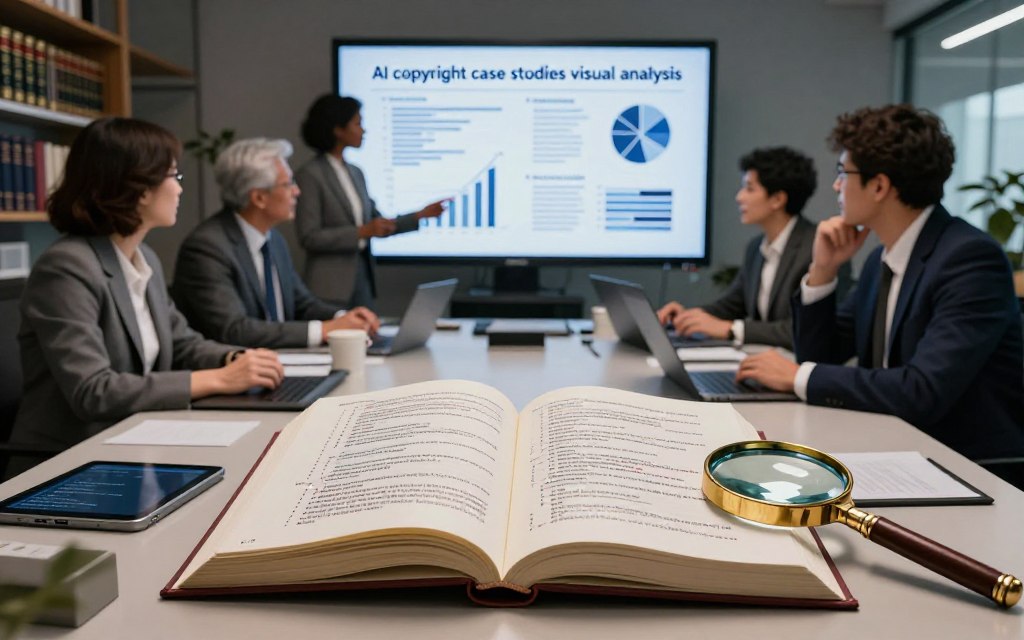
The table below summarises key incidents that have shaped the AI copyright discussion. Each case illustrates different aspects of the challenge.
| Case Study | AI System Involved | Nature of Issue | Outcome/Implications |
|---|---|---|---|
| New York Times Text Reproduction | ChatGPT (OpenAI) | Verbatim output matching copyrighted news article | Highlighted memorisation risks in LLMs; raised fair use questions |
| GitHub Copilot Lawsuit | GitHub Copilot (Microsoft) | Code generation allegedly infringing software licenses | Ongoing litigation testing copyright boundaries for AI training |
| CNET AI Articles Controversy | Undisclosed AI writing tool | Publication of AI-generated content with inadequate disclosure | Eroded reader trust; prompted industry debate on AI transparency |
| Academic Essay Submission Cases | Various chatbots including ChatGPT | Students presenting AI-generated work as their own | Forced educational institutions to revise integrity policies |
| Novel Excerpt Reproduction | Multiple language models | Output containing recognisable passages from published fiction | Demonstrated direct copyright infringement by AI |
These cases collectively demonstrate the tangible risks of unchecked AI content generation. They show how AI copyright issues manifest across different domains. Each incident provides lessons for developers, users, and policymakers navigating this complex landscape.
7. Legal Perspectives on AI and Copyright Infringement
AI-generated content is everywhere, and laws are struggling to keep up. The old rules of copyright law are being tested like never before. We’re looking at the big legal fights over AI copyright, from who can be an author to the big lawsuits that will shape our future.
7.1. Current Copyright Law and the “Author” Requirement
Most places, like the US and the EU, say copyright is for original works of authorship. But “author” always meant a human. This makes it hard for chatbots and other AI to get copyright protection.
Can a machine own a copyright? The answer is no, at least not yet. The US Copyright Office says only humans can own copyrights. This leaves AI-made content in a grey area, not owned by anyone but possibly infringing on others.
Academia is also changing its ways. Big guides like MLA and APA now tell us how to cite AI content. They see AI as a tool, not an author, putting the onus on the human user to check and verify.
This approach shows a growing agreement: even if laws are unsure, users must check their sources.
7.2. Fair Use Arguments in AI Training
The debate isn’t just about what AI makes but also what it learns from. Companies say using huge amounts of copyrighted data to train AI is fair use. They argue it’s for science and progress. But critics, like artists and publishers, say it’s unfair copying that hurts original work sales.
When deciding on fair use, courts look at four things:
- The purpose and character of the use (commercial vs. transformative).
- The nature of the copyrighted work.
- The amount and substantiality of the portion used.
- The effect of the use upon the market.
The outcome of this debate will greatly affect AI and copyright infringement in the future.
7.3. International Legal Frameworks and Pending Litigation
Legal rules vary worldwide. The EU’s AI Act wants more openness about data used in AI training. Japan has rules that are more open to AI. This mix of laws makes it hard to enforce and creates legal challenges.
These big questions are being argued in courts. Several key lawsuits are underway that will set important legal precedents:
- Authors vs. AI companies: Lawsuits saying AI models were trained on stolen books.
- Getty Images vs. Stability AI: A big case accusing the AI firm of copying millions of images without permission.
- Code generation disputes: Legal fights over whether AI-made code breaks copyright of existing software.
These cases will test fair use and might push lawmakers to update old laws. For now, AI copyright is a fast-changing and hotly debated area, with tech moving faster than laws can keep up.
8. Ethical Considerations for Developers and Users
ChatGPT warns that using its outputs without proper citation could be seen as dishonest. This puts the responsibility on the user to use it ethically. Ethical AI use is essential for responsible innovation.
It’s a shared responsibility between developers and users. They need clear guidelines to navigate this.
8.1. Developer Responsibility in Model Design and Curation
Developers are the first line of defence for ethics. Their design choices affect how well a system reproduces source material. They must work to reduce copying.
Using differential privacy and careful data curation is key. Developers should filter data to avoid copyrighted or sensitive material. They also need to document and implement safeguards.
These safeguards might include checks for data leakage. The aim is to create unique combinations, not exact copies. Proactive design is vital for ethical AI use.
8.2. User Accountability for AI-Generated Outputs
The person who prompts the AI and submits the work is accountable. ChatGPT advises that context is critical. Using an AI essay as your own in school is plagiarism.
Passing off AI-generated content as your own could be seen as dishonest. It’s important to be honest and transparent about using such tools.
In commercial or public content, not disclosing AI help can mislead people and damage trust. Users must verify facts, check for duplication, and add their own insights. The tool does not excuse users from producing honest work.
| Ethical Principle | Developer Responsibility | User Accountability |
|---|---|---|
| Preventing Verbatim Reproduction | Design models with techniques to reduce overfitting and memorisation. | Review outputs with plagiarism checkers and edit for uniqueness. |
| Ensuring Transparency | Provide clear documentation on model capabilities, limitations, and data sources. | Disclose AI assistance appropriately for the given context (e.g., academia, journalism). |
| Upholding Integrity | Curtail known biases in training data and model outputs where feasible. | Verify AI-generated information, add original analysis, and cite sources where needed. |
| Mitigating Harm | Implement safety filters and usage policies to prevent malicious application. | Use the technology for constructive purposes, avoiding deception or fraud. |
8.3. Transparency and Disclosure Best Practices
Transparency is key for ethical AI use. Being open builds trust and lets others evaluate the work’s origins. Best practices vary but always aim for honesty.
For example, academics might include a statement in their methodology. Journalists could note how AI helped in research or drafting. Universal best practices include:
- Explicitly stating when AI tools were used in the creation process.
- Clarifying the role of the AI (e.g., “for brainstorming initial ideas” or “for drafting an outline”).
- Taking public ownership of the final product, regardless of the tools used.
Following these practices shifts focus from hiding to responsible collaboration. It makes ethical AI use a standard, not an afterthought.
9. Detecting AI Plagiarism: Tools and Techniques
Finding out if text is copied by AI needs more than just old software. Today, we use new ways to check AI content detection. This includes everything from old methods to new software and the human eye.
9.1. Limitations of Traditional Plagiarism Checkers
Tools like Turnitin or Copyscape work by comparing text to a huge database. They look for exact or similar matches. But, they can’t find AI-generated content.
AI chatbots don’t copy like humans do. They create new text based on patterns they’ve learned. So, even if a text is new, it might not show up as copied in these tools. They can’t spot the signs left by AI.
9.2. Emerging AI-Detection Software: How It Works
New tools like GPTZero and Originality.ai have come to help. They look at text in a way that old tools can’t. They find signs that show if a text was made by a machine.
These tools check for perplexity and burstiness. Perplexity is how easy to guess a text is. AI texts are often very predictable. Burstiness is about sentence length and structure. Human texts have more variety.
These tools learn from lots of human and AI texts. They compare new texts to these to guess if it’s AI-made. It’s like AI is trying to find its own kind.
9.3. Manual Analysis: Spotting Hallmarks of AI Generation
Even with new software, a human eye is very good at spotting AI. A good editor or teacher can often tell if a text is AI-made.
Some signs include:
- Unusual Fluency: The text is perfect but feels unnatural.
- Generic Phrasing: It uses common phrases too much and lacks detail.
- Factual Superficiality: It covers topics well but lacks deep analysis.
- Repetitive Structure: Sentences are too similar, making the text dull.
- Absence of Error: It has no typos or personal touches typical of human writing.
For students and professionals, learning to spot these signs is important. It helps make sure AI-assisted work is original. This is key to using AI ethically, as explained in our guide on when AI use becomes plagiarism.
Effective detecting AI plagiarism needs both technology and human insight. As AI tech gets better, so must our ways to check for originality in writing.
10. Best Practices for Using Chatbots Without Plagiarising
Using chatbots without plagiarism is not about giving up on them. It’s about using them in a way that adds value to your work. This means using artificial intelligence to help you work more efficiently and to get ideas. But, you must make sure the final work is truly yours.

Here are some best practices for using chatbots in an ethical and effective way. They help you work with AI, not just use it passively.
10.1. Treating AI as a Research Assistant, Not a Ghostwriter
It’s important to see chatbots as fast research assistants, not ghostwriters. Assistants help gather data and suggest ideas. But, you should write the final work yourself.
Using AI for editing or brainstorming is okay. But, using it to write entire papers is not. Chatbots should start your research, not finish it.
- Use AI to: Brainstorm ideas, create outlines, summarise sources, or suggest sentence changes.
- Avoid using AI to: Write full sections, formulate theses, or submit drafts as your own.
This way, you keep control over your work. You do the research, synthesise the information, and write the final argument.
10.2. Effective Prompting to Encourage Unique Outputs
Good prompts can help chatbots avoid generic text. Instead of asking for a general essay, give specific instructions. This leads to more unique responses.
Creating effective prompts is a skill. It means giving the AI clear instructions and creative freedom.
- Provide Context and Role: Start with “Act as an expert in renewable energy policy. Analyse the following data set and identify three counter-intuitive trends…”
- Request Specific Formats: Ask for a “bullet-point list of arguments for and against,” a “comparison table,” or a “step-by-step explanation.”
- Instruct on Style and Tone: Specify “write in a concise, journalistic style” or “use analogies suitable for a beginner audience.”
- Iterate and Refine: Use the AI’s initial output to ask follow-up questions. “Now, critique the third point you made” or “rephrase that conclusion to be more cautious.”
This back-and-forth process makes the AI’s output more tailored and less likely to be copied.
10.3. The Essential Step: Verification, Editing, and Adding Value
No AI output should be used without significant human input. This step is key to avoiding plagiarism and making the work original. It turns AI-generated material into your own work.
Think of the raw output as a first draft. It’s like a draft written by someone who doesn’t fully understand the topic or your perspective. Your job is to fact-check, refine, and add your own voice.
10.3.1. Cross-Referencing Facts and Ideas
Chatbots can sometimes provide incorrect information. This is known as “hallucination.” You must check every fact, statistic, and quote yourself.
Use the AI’s output as a starting point, not a source. If it mentions a study, find and read the original publication. Check dates, author names, and numbers against reputable sources. This ensures accuracy and deepens your understanding, allowing you to write with authority.
10.3.2. Infusing Personal Analysis and Experience
This is where you add unique value. AI can’t replicate your personal insights, experiences, or critical evaluation. After checking facts, ask yourself:
- What is my unique opinion on this point?
- Can I add a relevant example from my own observations?
- How does this connect to other concepts I’ve studied?
- What are the limitations of this argument?
Rewrite the AI’s text to include these elements. Change the structure, improve the flow, and use your own words. If you use an AI-generated paraphrase, cite it properly. Modern style guides, like the MLA, provide formats for this, ensuring proper attribution.
This process of verification, synthesis, and personalisation makes your work transformative. It goes beyond AI’s statistical recombination to become a genuine product of your intellect.
11. The Future of AI, Creativity, and Intellectual Property
The debate on AI and plagiarism is changing. It’s leading to a new way of seeing, valuing, and protecting creative work. The future of AI copyright will be shaped by legal changes, new tech, and a shift towards teamwork in creation.
We’re looking at how our systems for protecting ideas might change. We’ll explore new tools and a new way of working with machines.
11.1. Evolving Definitions of Authorship and Ownership
Our current laws focus on human creators. They protect “original works of authorship” in a physical form. But AI systems create text, art, and code without human-like intent.
Experts and lawmakers are asking big questions. Can a machine be an author? If not, who owns the work—the user, the developer, or is it public? The answers will change the creative world.
One idea is functional authorship. This could mean copyright goes to the human who guided the AI. Another idea is treating AI like a tool, like a camera or word processor, where the user is the author.
The table below shows old copyright ideas versus new ones with AI:
| Aspect | Traditional Copyright Model | Emerging AI-Influenced Concepts |
|---|---|---|
| Basis for Protection | Original expression from a human author’s intellect. | Significant human creative direction or investment in AI-assisted generation. |
| Ownership Default | Vests automatically with the human creator. | May require contractual agreements between user, platform, and developer. |
| Duration of Rights | Author’s life + 70 years (typical). | Potentially shorter terms for AI-assisted works to balance innovation and public access. |
| Infringement Test | Substantial similarity to a protected human work. | Analysis may include whether output is a “memorised” copy from training data versus a novel synthesis. |
11.2. Possible Technological Solutions: Watermarking and Provenance
While laws change slowly, tech can offer quick fixes. Watermarking and provenance tracking are two promising solutions.
AI watermarking embeds a hidden signal in AI-made content. This signal is detectable by software but not by humans. It aims to show where the content came from.
Provenance tracking is about tracing a digital item’s history. It uses tech like blockchain to record a content’s journey. This includes its source, the AI model, prompts, and edits.
These tools could help spot AI-made content and verify submissions. But, there are challenges. Watermarks can be removed, and provenance systems need industry standards to work well.
11.3. A Collaborative Future: Human and AI Co-Creation
The most promising future is one where AI helps humans, not replaces them. The future is about human and AI co-creation. AI will be an idea generator, research helper, and draft writer. Humans will add judgement, emotion, and final editing.
This teamwork is already seen as ethical best practice. Humans will act as creative directors and editors. The value will be in the human touch, not just the AI output.
Setting norms for this partnership is key. We might see AI used openly in creative work. New ways to credit AI and humans could emerge. This way, we can share the work, acknowledging both human creativity and AI’s role.
Dealing with the future of AI copyright needs a balanced approach. We must update laws, develop tech solutions, and foster an ethical culture. This will let innovation grow while protecting human creativity.
12. Conclusion
The question ‘does a chatbot plagiarize’ is complex. A large language model like GPT-4 or Claude doesn’t copy text on purpose. It works by recognising patterns in a huge amount of data.
But, its output can lead to plagiarism. If an AI copies parts of its training data or if someone passes off AI work as their own, it’s wrong. The real problem is not the machine but how we use it.
We should see AI as a tool, not a writer on its own. It’s important to check and edit AI work carefully. We must also be open about using AI.
AI helps us be more creative and efficient. Using it right keeps our work honest. The future of original work depends on our values and how we use AI.
FAQ
Can an AI chatbot like ChatGPT be guilty of plagiarism itself?
In a strict legal and ethical sense, the chatbot itself cannot be “guilty” as it lacks intent or consciousness. Plagiarism is a human-centric concept involving the deliberate misrepresentation of another’s work as one’s own. The responsibility for plagiarism lies with the user who submits the AI’s output without proper attribution or transformative effort.
How does an AI language model generate text without directly copying?
Models like GPT-4 and Claude are trained on vast datasets to recognise statistical patterns in language. They generate responses by predicting the most probable next word or phrase based on these patterns and your prompt. They are not retrieving and pasting stored sentences but creating new sequences based on learned probabilities, which is fundamentally different from human copying.
What is “overfitting” and how can it lead to AI plagiarism concerns?
Overfitting occurs when an AI model memorises specific examples from its training data too closely, instead of learning generalisable patterns. This can cause “data leakage,” where the model reproduces long, verbatim passages from its training corpus—such as excerpts from copyrighted books or articles—in its outputs, raising serious copyright and plagiarism red flags.
Do standard plagiarism checkers like Turnitin detect AI-generated content?
Traditional plagiarism checkers are largely ineffective against AI-generated text because they are designed to find direct matches with existing sources. AI produces novel word sequences, so it typically won’t trigger these tools. But, dedicated AI-detection software now analyses statistical properties like “perplexity” and “burstiness” to identify machine-written prose.
Who holds the copyright for content created by an AI?
Current copyright law in most jurisdictions, including the UK and US, requires a human author. As such, purely AI-generated content may not be eligible for copyright protection. This creates a legal grey area. The user who provided the creative prompt and performed significant editing may have a claim, but this is untested and varies internationally.
What are the ethical best practices for using a chatbot in academic or professional work?
Key practices include: transparent disclosure of AI assistance; using the AI as a brainstorming or outlining tool; rigorously fact-checking and verifying all outputs; and adding substantial original analysis, insight, and value. The user is ultimately accountable for the content they submit.
Can I be accused of plagiarism for using an AI paraphrasing tool?
Yes. Simply using an AI to rephrase another author’s work without citation constitutes plagiarism. Ethical use involves generating initial ideas from your own prompts and then synthesising, criticising, and building upon the AI’s output with your own intellectual contribution.
What is being done technologically to identify AI-generated text?
Beyond detection tools, researchers and companies like OpenAI and Google are developing technical solutions. They include digital watermarking (embedding subtle, identifiable patterns in AI text) and provenance tracking systems. These aim to improve transparency in the future.


 By
By